

Mixing Equipment
Why Choose Us?
Rich Experience
Since its establishment, Gaokangmedical-lab has developed into a comprehensive enterprise integrating chemical equipment R&D, production and process customization through continuous technological innovation and market expansion.
Wide Range of Applications
The products are widely used in laboratories, scientific research institutions, universities, chemical enterprises, hospitals, new energy, agriculture, food, metallurgy, mining, construction, petroleum and other industries.
Reliable Product Quality
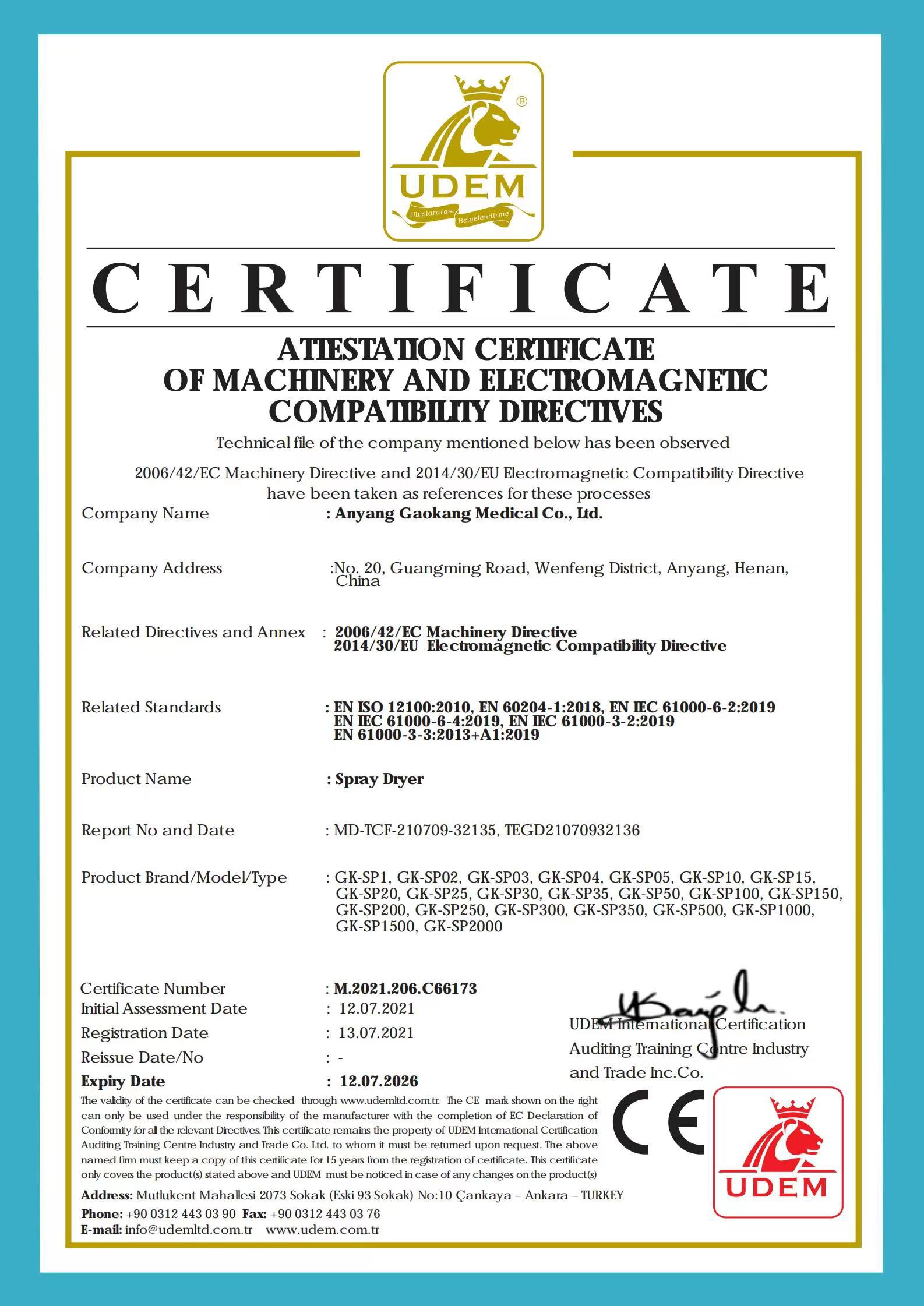
The company is committed to the research and development and production of low-temperature extraction equipment for fats and oils, and undertakes complete sets of equipment for fats and oils. We do multiple tests before leaving the factory. And we have passed ISO 9001, CE and other quality tests.
Advanced Equipment
Gaokangmedical-lab has introduced world-class automated production equipments and production technologies, and continuously expanded its production capacity to meet customers' demands. The investment of advanced production equipment and software facilities makes the enterprise more internationalized and standardized.
What is Industrial Fodder Mixing Machine?
Feed mixer is a kind of machine equipment specially used to mix feed. The feed mixer can mix many different feeds, such as grains, proteins, vitamins, minerals, carbohydrates, etc., to make a comprehensive and balanced feed. Feed mixers are widely used in animal husbandry and poultry production, which can improve the utilization rate of roughage for farmers and improve the economic benefits of farming.
What is Ultrasonic Homogenizer Mixer?
An ultrasonic homogenizer mixer, also called an ultrasonicator or ultrasonic mixer, is a type of equipment used for sample processing in the laboratories. Ultrasonic homogenizers can be used for cell wall breaking, nano-material dispersion, organic extraction, oil-water emulsification and accelerated dissolution, among other uses. Its application potential spans the life sciences, material sciences, pharmaceuticals, environmental sciences, chemistry and other fields.
-
![Bins Mixer]() Bins MixerHTD & HZD series Bins mixer is a fully automatic lifting hopper mixer engineered for the final blending of dry powder and granules in the pharmaceutical, food, chemical and new-material industries.read more
Bins MixerHTD & HZD series Bins mixer is a fully automatic lifting hopper mixer engineered for the final blending of dry powder and granules in the pharmaceutical, food, chemical and new-material industries.read more -
![Bin Blender Pharmaceutical]() Bin Blender PharmaceuticalHTD & HZD series Bin blender pharmaceutical is a fully automatic lifting hopper mixer engineered for the final blending of dry powder and granules in the pharmaceutical, food, chemical and...read more
Bin Blender PharmaceuticalHTD & HZD series Bin blender pharmaceutical is a fully automatic lifting hopper mixer engineered for the final blending of dry powder and granules in the pharmaceutical, food, chemical and...read more -
![Animal Feed Mixer]() Animal Feed MixerThe primary function of Animal feed mixer is to achieve a completely uniform blend of multiple dry ingredients. The unique double helical ribbon agitator design ensures gentle yet thorough mixing...read more
Animal Feed MixerThe primary function of Animal feed mixer is to achieve a completely uniform blend of multiple dry ingredients. The unique double helical ribbon agitator design ensures gentle yet thorough mixing...read more -
![Homogenizer Mixing Tank]() Homogenizer Mixing TankOur build homogenizer mixing tank that delivers reliable, repeatable results for everything from cosmetics and food sauces to pharmaceutical creams. Our standard models are engineered to handle...read more
Homogenizer Mixing TankOur build homogenizer mixing tank that delivers reliable, repeatable results for everything from cosmetics and food sauces to pharmaceutical creams. Our standard models are engineered to handle...read more -
![Double Cone Dryer]() Double Cone DryerOur double cone dryer is designed specifically for the pharmaceutical, food and fine chemical industries. They achieve uniform drying and gentle mixing of materials through their unique double...read more
Double Cone DryerOur double cone dryer is designed specifically for the pharmaceutical, food and fine chemical industries. They achieve uniform drying and gentle mixing of materials through their unique double...read more -
![Horizontal Ribbon Blender]() Horizontal Ribbon BlenderHorizontal ribbon blender is general used in the mixing of viscous or adhesive powder material, or the mixing of powder which needs to add liquid, and paste material.read more
Horizontal Ribbon BlenderHorizontal ribbon blender is general used in the mixing of viscous or adhesive powder material, or the mixing of powder which needs to add liquid, and paste material.read more -
![Horizontal Screw Mixer]() Horizontal Screw MixerHorizontal screw mixer is a stainless steel horizontal trough-type mixer. It is used in the pharmaceutical, chemical and food industries for mixing powdery or pasty materials.read more
Horizontal Screw MixerHorizontal screw mixer is a stainless steel horizontal trough-type mixer. It is used in the pharmaceutical, chemical and food industries for mixing powdery or pasty materials.read more -
![V Type Mixer]() V Type MixerThe V type mixer unique V-shaped structure design can ensure that the materials are fully flipped and evenly distributed during the mixing process, thus achieving an efficient mixing effect.read more
V Type MixerThe V type mixer unique V-shaped structure design can ensure that the materials are fully flipped and evenly distributed during the mixing process, thus achieving an efficient mixing effect.read more -
![Ultrasonic Reactor]() Ultrasonic ReactorGlass Ultrasonic reactor:read more
Ultrasonic ReactorGlass Ultrasonic reactor:read more
1.Compatible with frame reactor/lifting reactor/filter reactor
2.Supporting adjustable power of 20KHz and 2-3KW
3.It provides amplitude variation... -
![V-Shape Powder Mixer]() V-Shape Powder MixerV-Shape Powder Mixer adopts V-type cylinder design, efficiently mixing dry powder/granules with 98% uniformity, suitable for pharmaceutical, chemical, food and other industries, in line with GMP...read more
V-Shape Powder MixerV-Shape Powder Mixer adopts V-type cylinder design, efficiently mixing dry powder/granules with 98% uniformity, suitable for pharmaceutical, chemical, food and other industries, in line with GMP...read more -
![Industrial Stand Mixer]() Industrial Stand MixerThe industrial stand mixer is a kind of high-efficiency mixing equipment widely used in chemical, food, pharmaceutical, building materials and other industries, mainly used to mix different...read more
Industrial Stand MixerThe industrial stand mixer is a kind of high-efficiency mixing equipment widely used in chemical, food, pharmaceutical, building materials and other industries, mainly used to mix different...read more -
![Laboratory Mixing Equipment]() Laboratory Mixing EquipmentLaboratory mixing equipment mainly mixes all kinds of powders evenly through the rotary tank, which has the features of high efficiency,energy saving and convenient operation.read more
Laboratory Mixing EquipmentLaboratory mixing equipment mainly mixes all kinds of powders evenly through the rotary tank, which has the features of high efficiency,energy saving and convenient operation.read more


Advantages of Industrial Fodder Mixing Machine
Efficient Mixing
This results in a well-balanced diet for animals, leading to improved health and productivity. The space-saving design of industrial fodder mixing machines is also advantageous for farmers with limited space. Additionally, the low maintenance requirements of industrial fodder mixing machines make them a practical choice for farmers who want to reduce downtime and maintenance costs.
Space-saving Design
The vertical design of feed mixers is known for its space-saving features, making them an ideal option for farmers with limited space. The vertical layout allows for a more compact footprint compared to horizontal mixers, which take up more floor space. Additionally, the vertical design allows for efficient use of vertical space, meaning that the mixer can be taller and still be a space-efficient option.
Low Maintenance
This makes them a practical and cost-effective option for farmers who want to minimize downtime and maintenance costs. In addition, industrial fodder mixing machines offer improved feed quality due to their ability to thoroughly and uniformly mix feed ingredients, resulting in a well-balanced diet for animals that meets their nutritional requirements. With their efficient mixing process, space-saving design, versatility, and low maintenance requirements, industrial fodder mixing machines are a reliable and efficient tool for farmers seeking to improve their animal feed management.
Versatility
In addition to their space-saving design, industrial fodder mixing machines also offer the advantage of versatility. They can handle a wide range of feed ingredients, from hay and silage to grains and protein supplements, making them a great choice for farmers who need to mix different types of feed for their animals. With the ability to mix different types of feed, farmers can provide a well-balanced diet for their animals that meets their nutritional requirements, resulting in improved animal health and productivity.
Improved Feed Quality
When it comes to animal feed, the mixing process is critical. And let me tell you, industrial fodder mixing machines are the way to go if you’re looking for top-notch feed quality. Why? Because their efficient mixing process ensures that all ingredients are evenly distributed, resulting in improved animal health and productivity. So, if you want to take your livestock to the next level, give industrial fodder mixing machines a try.
Increased Productivity
If you’re running an animal agriculture operation, you know that efficiency and profitability are key. And let me tell you, using industrial fodder mixing machines can help you achieve both. With improved feed quality and more efficient mixing, these machines can increase productivity and ultimately boost your bottom line. So, if you want to take your animal agriculture operation to the next level, consider investing in a industrial fodder mixing machine.
Types of Industrial Fodder Mixing Machine

Horizontal Type Feed Mixer
This type of feed mixer is available in two types, namely auger or reel. The purpose of using a horizontal feed mixer was original to mix forage for the feedlot industry. The corn straw or silage undergoes an initial crushing process and is then mixed with concentrate in the feed mixer. Over time, the horizontal Mixer feed developed with the addition of blades to the auger. This allows for faster feeding of hay and other materials without the need for crushing outside the machine. This feed crushing and mixing technology has been in use since the 1960s, replacing the previously used mixer and chain-based animal feed feeders.
Vertical Type Feed Mixer
This type of feed mixer generally consists of one or more large diameter augers. As the name suggests, the auger is designed vertically and descending and is equipped with a planetary gear drive. The driving position is under the tapered drum. The emergence of this type of feed mixer began to appear in the early 1990s. Livestock businesses rely on it to process round bales of fodder, which are then combined into the TMR in a single mixer. The process of mixing feed ingredients in the vertical mixer takes place exclusively and is supported by the force of gravity. The stirring process will lift the feed ingredients at the bottom, thrown up and then again stir and mix until the results are evenly distributed.

Auger Configuration
Though speed and efficiency are important, your mixer should also thoroughly mix the components. From breaking up whole bales to cutting hay and straw, incorporating silage, grain, mineral and concentrates, your feed mixer should be able to create a uniform feed ration without it over-processing. There are multiple auger configurations on combinations on the market, however, the most common are vertical and horizontal augers. Depending on the size and volume of the feed you want to mix, you have the option to choose between one to four augers in the mixing bowl.
Long Lasting
Feed mixers go through tough work, so you need a machine made from even tougher materials. It’s best to look for feed mixers with these key specifications, 20mm augers, 20mm bottom plate and 10mm walls. Ideally made out of 350 grade steel, stainless steel or Hardox where possible.
Size And Type
Choosing the right size of your feed mixer depends on your herd size, densities and quantities. Mix tubs come in both standard wide body (2.5m) or our extra-wide body (2.65m) to better suit large, high-density bales. The extra wide body gives large bales more space to be pulled into the mixer, reducing any material being thrown out and allows for a lower profile design making it more suitable for smaller loaders.
Feedout Requirements
It’s important to assess how you are presently feeding your livestock and how to then match your new feed mixer to suit. Are you presently feeding on the ground in the paddock, into troughs or into tall self feeders? A hydraulic side shifting cross conveyor is an excellent tool for feeding on the ground, in a paddock or into very short troughs. A small flip-up elevator is ideal for delivering feed into taller troughs and ring feeders and a tall elevator is the only way you will reach the tallest of self-feeders. Should your feeding be a very high grain percentage you will want an auger delivery system over the traditional belt/slat type system. It’s important to know the heights of all your feeding stations to best know what feed out option suits your farm.
Feature of the Industrial Fodder Mixing Machines
Sizes
Modern fodder mixing machines are available in different sizes to suit production purposes. There are portable, mobile mixers, and small, medium, and scale fodder mixing machines depending on the nature and scale of production.
Multipurpose Mixers
The need to have one purposed mixer has evolved, instead of having different types of mixers for different purposes. For instance, advancement in technology has led to the development of multipurpose mixers like batch and continuous mixers to create a homogeneous mixture of feed ingredients.
High Capacity
High power animal feed mixer have been developed with a high inbuilt capacity system to handle the mixture of various categories of feed ingredients. These mixers are very efficient and effective in the homogenous blending of feed ingredients due to their high capacity.
Improved Control System
Unlike the traditional livestock feed mixers that do not have an accurate control system of feed blending texture. Modern fodder mixing machines have an improved feed control system that allows the users to adjust and determine the nature of the texture and quality feed mixture.
Environmental Friendly Mixers
Traditional feed mixers discharge a lot of carbon which contributes to global warming, but modern mixers are designed with eco-friendly systems that reduce carbon emission, thereby promoting a sustainable environment.
Energy Efficient
Modern mixers are designed with technology that is energy efficient. They consume less energy compared to the traditional mixers which consume a lot of energy. Due to less energy consumption, a limited amount of capital is invested in fuel, diesel, and electricity for the electronic-operated feed mixers.
Design with Durable and Galvanized Steel
Highly technology feed mixers are designed with durable material that can withstand feed processing for a long period. These galvanized materials prevent corrosion and rusting thereby increasing the lifespans of the mixers. The washing and cleaning of these mixers are very easy since they are designed with stainless steel.
Inbuilt Control Software
There is a lot of built-in software on the modern fodder mixing machine. Software that allows the use of remote control, and digital sensor that will enable the users to control and monitor the operation of the livestock feed mixer from a distance.
Inbuilt Safety System
Unlike the traditional fodder mixing machines, the highly technology modern mixers have an inbuilt safety system that ensures the safety of the mixers. They are built with a well-installed precision device to turn off when grinding and mixture are completed to prevent overworking and damage respectively.
Components of Ultrasonic Homogenizer Mixers
The ultrasonic transducer is the heart of the ultrasonic homogenizer, which converts the electrical energy into high frequency (20kHz – 100kHz) sound waves for a process called piezoelectric effect. The transducer is made of a special material that is called piezoelectric crystals. These crystals generally made of quartz or ceramic, that vibrates very fast when subjected to a changing electric field. These vibrations are transmitted to the probe, which amplifies and focuses the energy into the sample.
The probe is a metal rod or horn that is connected to the ultrasonic transducer and immersed into the sample. The horn is designed to amplify the energy from the transducer into the sample. Also, it should be minimize the energy loss due to reflection, absorption, or diffraction. The shape and size of the horn can change depending on the application and the sample characteristics like viscosity, density, and volume. Some common shapes of horns are cylindric, conic and flat.
The sample container or vessel is the container that holds the sample during the ultrasonic homogenization process. It can be made of different materials, such as glass, plastic, metal, or ceramic, depending on the compatibility with the sample and the ultrasonic energy. The vessel should be able to withstand the high-intensity sound waves and the associated temperature and pressure changes without breaking or deforming. Some vessels may also have cooling or heating features to control the sample temperature during sonication. Also, ultrasonic homogenizers generally have some safety features like safety switches or fuses.

The principle of ultrasonic homogenization is grounded on the phenomena of acoustic cavitation, which arises when high-intensity sound waves travel through a liquid. When electrical energy is applied to the ultrasonic transducer, it's converted into these high-frequency sound waves. These waves, upon entering the liquid via the probe, create alternating cycles of compression (high pressure) and rarefaction (low pressure). During the rarefaction phase, microscopic bubbles or voids are formed. As the pressure rises during the compression phase, these bubbles undergo rapid collapse, producing extreme local temperatures and pressures. This leads to the generation of high-shear forces, shock waves, and microjets. Such intense forces disrupt cells or particles in the sample, resulting in their breakdown or dispersion into finer fragments. The outcome is a homogenized or sonicated sample ready for various applications, including analysis, extraction, purification, or synthesis.
Ultrasonic Homogenizer Mixer Applications
Ultrasonic homogenizer mixers can be used to disrupt cells and extract DNA, RNA, or proteins from biological samples, such as tissues, cells, bacteria, or viruses. The high-intensity sound waves can break the cell membranes and release the intracellular components, which can then be isolated and analyzed.
Ultrasonic homogenizer mixers can be used to mix and homogenize different substances, such as powders, liquids, or gases, by applying high-frequency sound waves. This can improve the uniformity and consistency of the mixture and enhance the reactivity or solubility of the components.
Ultrasonic homogenizer mixers can be used to remove the entrapped air bubbles or gases from liquids, such as solvents, coatings, or resins. The high-intensity sound waves can create cavitation bubbles that collapse and release the trapped gases, leading to a more uniform and defect-free product.
Ultrasonic homogenizer mixers can be used to reduce the size of particles or aggregates to nanometer scale, which can enhance their surface area, reactivity, or bioavailability. The high-intensity sound waves can induce shear forces, cavitation, and acoustic streaming, leading to the fragmentation and disintegration of the particles.
Ultrasonic homogenizer mixers can be used to enhance the rate and selectivity of chemical reactions, such as hydrolysis, esterification, oxidation, or reduction. The high-frequency sound waves can promote the mass transfer, mixing, and activation of the reactants, leading to a more efficient and sustainable process.
Ultrasonic homogenizer mixers can be used to clean and sterilize surfaces, equipment, or instruments, by applying high-intensity sound waves in a cleaning solution or disinfectant. The cavitation effect of the sound waves can remove the dirt, debris, or microorganisms from the surface, leading to a more effective and eco-friendly cleaning method.
Ultrasonic homogenizer mixers can be used to create stable emulsions and dispersions of liquids, such as oil in water or water in oil emulsions, or suspensions of solids in liquids. The high-frequency sound waves can break the surface tension and agglomerates of the particles. With just 10 minute of sonication, Ultrasonic homogenizer mixers can reduce interfacial molecular area by 5 times. Result of the process leads to a more uniform and stable dispersion.
Operating Procedure of Ultrasonic Homogenizer Mixers
Prepare the sample
Depending on the type of sample and the ultrasonic homogenizer being used, it may be necessary to cut the tissue into small pieces, grind it, or otherwise prepare it for homogenization. It’s also important to prepare a buffer or solvent that is compatible with the ultrasonic homogenizer, and that can protect the integrity of the molecules being extracted and also help to dissolve the sample for better extraction.
Place the sample in the sample chamber or beaker
Carefully pour the sample into the sample chamber or beaker, making sure that the level of the sample is appropriate for the size and type of the ultrasonic homogenizer being used.
Secure the lid or cap
Make sure the lid or cap is properly secured to prevent any splashes or spills.
Turn on the ultrasonic homogenizer
Turn on the power switch to start the ultrasonic homogenizer.
Adjust the settings
Adjust the amplitude control, timer, and other settings as needed to ensure that the sample is homogenized to the desired particle size.
Homogenize the sample
Allow the ultrasonic homogenizer to homogenize the sample for the desired time.
Check the homogenized sample
It’s important to check the homogenized sample to ensure that the particles are small enough and the sample is homogenous.
Extract the desired components
The homogenized sample can then be used to extract the desired components, such as proteins or nucleic acids, using methods such as centrifugation or chromatography.
Store the extracted sample
Finally, it’s important to store the extracted sample in a way that preserves its integrity, such as freezing it at -80C or keeping it at 4C.
Clean and maintain the ultrasonic homogenizer
Clean and properly maintain the ultrasonic homogenizer according to the manufacturer’s instructions, to ensure optimal performance and longevity.
Our Factory
Since its establishment, Gaokangmedical-lab has developed into a comprehensive enterprise integrating chemical equipment R&D, production and process customization through continuous technological innovation and market expansion. Relying on its strong R&D capability and rich intellectual property resources, the company is gradually occupying a place in the field of chemical and pharmaceutical equipment. Located in the advanced equipment park of Anyang High-tech Zone, covering an area of 15,000 square meters, it has an engineering design department, an engineering installation department, a workshop for equipment manufacturing, a workshop for the second workshop and a workshop for the assembly of subcritical extraction electrical parts.

Our Certifications
The company has passed ISO9001 quality management system certification, EU CE, SGS, TUV and other certifications.



FAQ
As one of the leading mixing equipment manufacturers and suppliers in China, we warmly welcome you to buy high-grade mixing equipment made in China here from our factory. All machines are with high quality and competitive price.