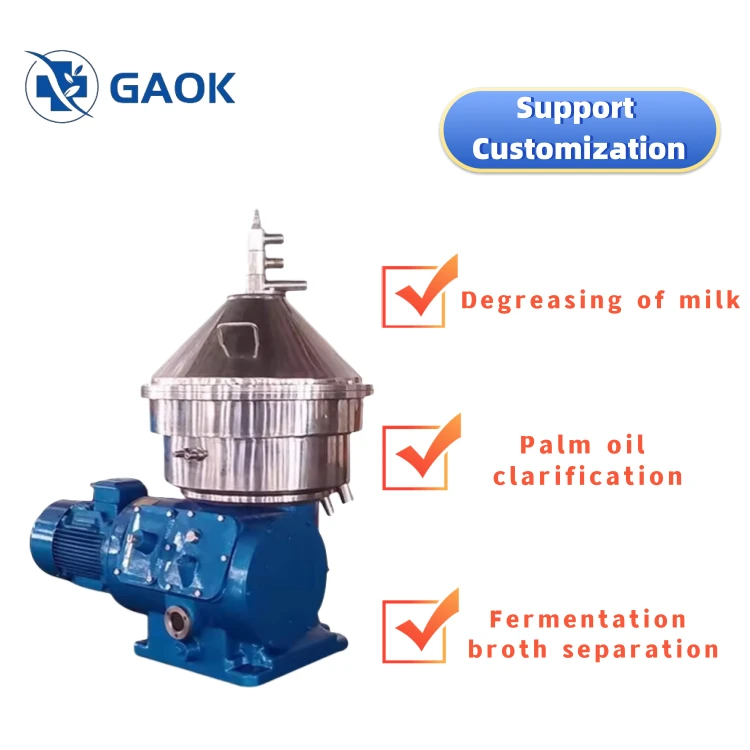
Disc centrifuge, with their high speed and thin-layer separation principle, can improve the fiber removal rate of plant microfiber aqueous solution to ≥98% under normal temperature and low energy consumption conditions, and the turbidity of the clarified liquid is ≤5 NTU, meeting the requirements of subsequent fermentation, extraction or beverage bottling.
Disc centrifugation technology principles
Disc centrifuges utilize the powerful centrifugal force (up to 10,000 × g or more) generated by high-speed rotation to achieve efficient solid-liquid separation within the narrow channels formed by the disc array.
Three-stage separation process:
Feed Distribution: The plant aqueous solution enters through the central feed pipe and is evenly distributed to the bottom of the drum.
Separation by Layers: Within the gaps between the discs, denser fiber particles move outward under centrifugal force and deposit on the inner wall of the drum; the clarified liquid phase aggregates towards the center.
Continuous Discharge: The clarified liquid is continuously discharged via a centrifugal pump, while the solids are periodically or continuously discharged through a slag removal mechanism.
Process flow (taking 7% fiber content as an example)
Pre-crushing: Plant biomass is processed by a shear crusher to D50≤200 µm to reduce fiber length and minimize disc clogging;
Temperature and pH adjustment: 25-35 ℃, pH 4.5-6.5 to prevent protein denaturation and reduce foaming;
Disc fiber removal:
1.Speed: 7000-8500 rpm, separation factor G≈12000;
2.Feed flow rate: selectable according to throughput; Heavy phase (fiber) ≤0.1%;
3.light phase (clarified liquid) ≥95% recovery rate;
Online backflushing: Automatic backflushing for 1 minute every 30 minutes to prevent fiber cushion compaction and ensure continuous operation >8 hours.
(Generally, appropriate parameters are matched based on the specific materials and customer requirements.)
Disc centrifugation technology is redefining solid-liquid separation standards in the plant extraction industry. Its high efficiency, continuous operation, and gentle nature make it suitable for processing challenging plant aqueous solutions with a solid content of around 10%.