

I. Background of the Saffron Industry and Extraction Sector
Although the content of active ingredients in dried saffron stigmas is low (crocin about 2–3.5%, trace amounts of crocin), the extraction process is extremely sensitive to yield, temperature control, and solvent consumption due to the high price of raw materials (dried stigmas range from USD 800–3000/kg).
Current mainstream processing direction:
- Traditional extraction → filtration → concentration → finished product (food/beverage/cosmetic additive)
- Ultrasonic extraction → membrane filtration → macroporous resin purification → concentration → freeze-drying/spray drying (pharmaceutical/health product grade high purity Crocin)
- Industrial alternatives: Extracting crocin/crocin from gardenia (low cost, stable content, suitable for industrial pigments and functional raw materials)
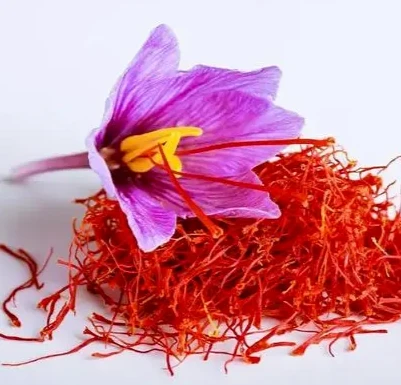
II. Typical saffron extraction and refining process
Dried saffron stigmas or dried gardenia fruit (alternative ingredients)
↓ [Pretreatment: Impurity removal → Low-temperature pulverization (≤40℃) → Passing through a 20-40 mesh sieve]
↓
【Extraction Section】
├─ Water/ethanol-water ultrasonic extraction
│(T=50–80℃, pH 6.0–7.0, ultrasound enhancement can be performed at room temperature)
│ Crocin has the best solubility in EtOH:H₂O = 40–70%.
↓
【Filtration/Impurity Removal】
├─ Duplex Filter / Plate and Frame Filter Press
├─ (Optional) Ceramic membrane microfiltration (MF, 0.1–0.2 μm) for protein/polysaccharide removal.
↓
【Concentration】
├─ Vacuum thin-film evaporator or falling film concentration (≤60℃, anti-degradation)
│ Alternatively, low-temperature nanofiltration (NF) concentration (energy-saving, good activity retention)
↓
【Purification】
├─ Alcohol precipitation, fine filtration
↓
【Secondary Concentration + Solvent Recovery】
↓
【Dry】
├─ Vacuum freeze drying (high-end crocin ≥95%)
└─ Alternatively, spray drying (with maltodextrin as a carrier, food grade).
↓
【Pulverization → Mixing → Packaging → Quality Inspection (GC-MS/HPLC)】
III. From Small-Scale Testing to Factory Production – Equipment Configuration Scheme
The following is for reference only. It can be adjusted according to specific needs.
① Laboratory pilot-scale testing (R&D / University / QC) – Small batches, flexible.
|
Equipment |
Specifications |
|
Small extraction tank (with reflux condenser) |
5–20 L, SUS316L, electric heating, PID temperature control |
|
Miniature ultrasonic extraction tank/probe |
Ultrasonic power adjustable from 500W to 2kW |
|
Laboratory vacuum rotary evaporator |
5L rotary bottle, chiller + vacuum pump |
|
Plate and frame/microporous membrane filters |
0.22/0.45μm needle type or stainless steel |
|
Small freeze dryer |
0.1–1 m² shelf, -50 to -80°C cold trap |
|
Small pulverizer (low temperature) |
Airflow/tooth disc type, equipped with ice bath or inert gas protection |
·Typical investment (including basic CIP): USD 10,000 – 25,000
·Applications: Process exploration, HPLC standard preparation, formulation development
② Pilot Line (Process Scale-up Validation / Small Batch High-Value Products)
|
Stage |
Specifications |
|
Extraction |
50–100–200 L Multifunctional Extraction Vessel (Ultrasonic + Hot Reflux Dual Mode), Jacketed Heating, CIP Nozzle |
|
Filtration |
Dual filter + optional ceramic membrane MF module |
|
Refine |
Decolorization tank + alcohol precipitation tank (with cooling jacket) + precision filter |
|
Concentration |
Single-effect/double-effect vacuum concentrator (evaporation capacity 30–100 kg/h water) |
|
Dryer |
5–20 kg/batch freeze dryer or 5 kg/h small spray drying machine |
|
Control |
PLC + HMI, recording temperature/pressure/time curves |
·Typical investment (complete pilot line, 316L + CE): USD 70,000 – 190,000
·Applications: Scale-up verification, registration application samples, small-batch production of high-purity crocin, and natural cosmetic raw materials.
③ Industrialized production (commercial production – saffron or gardenia source)
|
Stage |
Specifications |
|
Extraction |
Multiple parallel ultrasonic extraction tanks (with automatic slag discharge) ranging from 500 to 3000 L. |
|
Filtration |
Disc centrifuge + plate and frame + ceramic membrane MF (50–200 nm) |
|
Refine |
Decolorization tank (activated carbon) + alcohol precipitation tank (with refrigeration) + fine filtration; continuous alcohol precipitation centrifuge can also be added. |
|
Concentration |
Double/triple effect vacuum evaporator (evaporation capacity 300–2000 kg/h) + NF nanofiltration unit |
|
Dryer |
50–200 kg/batch, freeze dryer or spray drying (with maltodextrin carrier) |
|
Solvent recovery |
Ethanol recovery tower (≥92% recovery rate), explosion-proof design. |
|
Automation |
Full PLC/DCS, audit trail, GMP compliant (IQ/OQ/PQ) documentation. |
· Typical investment ( GMP standard, 500–2000L): USD 250,000 – 800,000+ (visuals, automation, certification requirements)
· Plant requirements: floor height ≥ 6 m (evaporation), explosion-proof area (ethanol section), independent CIP/SIP station.
IV. Key Technical Points and Common Problems
✅ Temperature Control is Extremely Important
Saffron degrades significantly in aqueous solutions above 85℃. Extraction is recommended at ≤75℃ (slightly higher for ethanol systems), and concentration at ≤60℃. Membrane concentration or low-temperature vacuum is preferred.
✅ Solvent Selection
- Food/Beverage: Pure water extraction (light color, mild flavor)
- High-Yield Extraction: 40–60% edible ethanol/water, operated in the dark
- Purification: Alcohol precipitation, fine filtration, etc.
✅ Raw Material Substitution Considerations
Due to the extremely high cost of saffron stigmas, industrially produced saffron pigment and crocin acid are mostly derived from gardenia fruit. The extraction process involves ultrasonic extraction → filtration → purification → freeze-drying. The yield and purity meet food/health product standards, and the cost is only 1/20–1/50 of that of direct saffron extraction.
✅ Hygiene and Certification
- Material Contact: SUS316L, Ra ≤ 0.8μm (GMP grade ≤ 0.4μm)
- Fully CIP, quick-connect sanitary fittings, no dead angles
- CE / ASME / GMP verification documentation package available
V. Conclusion
The saffron extraction line is a typical heat-sensitive, high-value-added plant extraction project. The key lies in:
1. Low-temperature/short-time/light-protected process
2. Suitable solvent system and resin purification combination
3. A well-coordinated design for extraction-membrane filtration-concentration-drying at a suitable scale
4. GMP-level hygiene and traceability documentation support
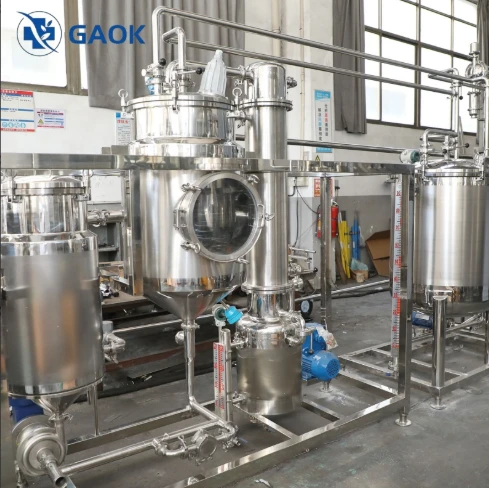
We can provide customers with a complete process design, equipment manufacturing, installation and commissioning, and GMP verification documentation support from Lab → Pilot → Industrial. At the same time, we can provide equipment solutions based on your process requirements.