

Ⅰ. Why do you need a feed fermentation line instead of a single fermentation tank?
Many customers, when first encountering fermented feed, react by saying, "I'll buy a fermentation tank to try it out."
The result is often the same: the tank arrives, but they don't know how to mix the inoculum; the inoculum is mixed, but the temperature can't be controlled; the temperature is controlled, but the moisture content of the output is incorrect; the moisture content is adjusted correctly, but the animals won't eat it. This isn't a problem with the equipment; it's a lack of a complete production line mindset.
A feed fermentation system production line isn't just piecing together several pieces of equipment, but rather connecting the six stages-raw material pretreatment, conditioning, inoculation, fermentation, drying, and packaging-with a unified process logic and control system. Its core value isn't just "being able to ferment," but "the ability to ferment consistently high-quality feed in every batch."
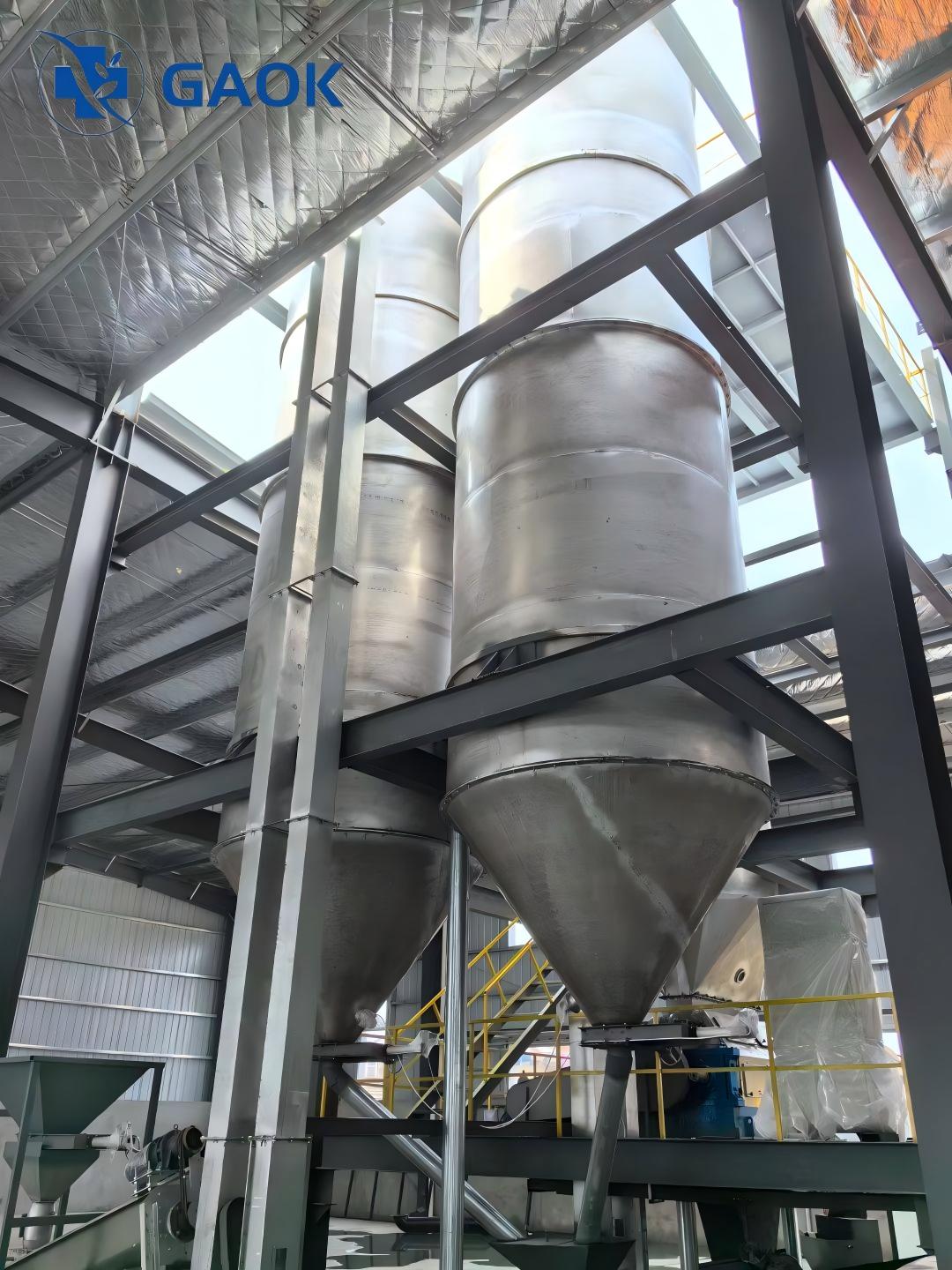
II. Raw Material Pretreatment: The First Hurdle for Whole Corn Kernels Entering the Fermentation Process
The fermentation raw materials are whole corn kernels, whole rice kernels or broken rice, soybean hulls or skins, soybeans, broken soybeans, soybean flour, and wheat-all in "whole" or "coarse" form, not powder.
Why not use powder?
This is a common pitfall for many novices. While powder has high mixing efficiency, it faces two fatal problems in solid-state fermentation:
1. Poor air permeability: Powder easily clumps and hardens when it comes into contact with water, preventing oxygen from penetrating the material and hindering aerobic bacteria (such as Bacillus subtilis and Aspergillus oryzae) from initiating enzyme production.
2. Localized overheating: Powder has strong heat storage capacity but poor heat dissipation. In the later stages of fermentation, the internal temperature may soar above 55°C, exceeding the tolerance range of most probiotics.
The advantage of whole or coarse-grained raw materials is that they retain a large number of gaps between the particles, ensuring initial oxygen distribution and providing physical channels for subsequent turning and heat dissipation. The patented technology explicitly combines "crushed corn stalks" with "whole corn kernels" to balance fermentation efficiency and nutrient release.
Production line implementation recommendations: If the corn supplied by the raw material supplier is excessively finely crushed (e.g., all passing through a 20-mesh sieve), it is recommended to add a step of re-mixing coarse materials to control the proportion of fine powder below 30%. Otherwise, problems will arise in the later mixing auger and fermentation uniformity.
III. Ingredients and Mixing: Selection Logic of Ribbon Mixers
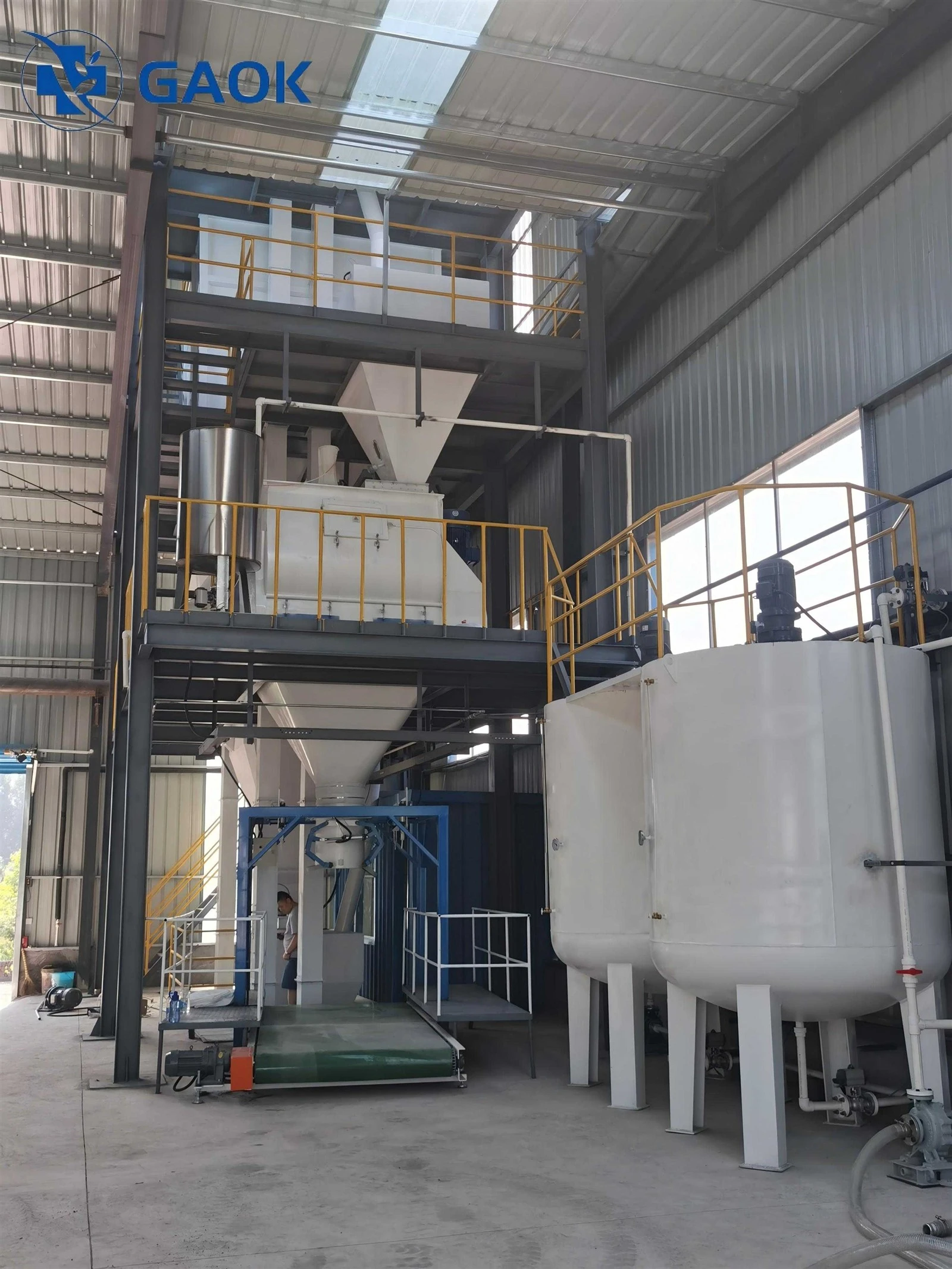
Ribbon mixers are the optimal choice, with a batch mixing time of 3-6 minutes.
Why choose a ribbon mixer instead of a paddle or plough mixer?
The core advantage of ribbon mixers lies in "no dead-angle turning"-the outer ribbon pushes the material from both ends towards the center, while the inner ribbon pushes it from the center towards both ends, forming a convection circulation. This is crucial for solid raw materials with poor flowability and large specific gravity differences, such as corn kernels and soybean hulls:
- Whole corn kernels (specific gravity approximately 0.7-0.8) and soybean hulls (specific gravity approximately 0.2-0.3) will have difficulty achieving the required uniformity of CV ≤ 10% if not thoroughly turned.
- After adding the bacterial solution, only thorough mixing can ensure uniform adhesion of the inoculum, avoiding situations where "some materials are over-fermented while others haven't even started."
Production Line Implementation Recommendations: The drop design between the mixer's outlet and the buffer hopper deserves attention. The design adopts a path of "mixer → buffer silo → auger discharge". The drop should not be too large (≤1.5m is recommended). Otherwise, the impact force of the falling material will cause the particles to break and dust to be raised, which will both waste raw materials and pollute the environment.
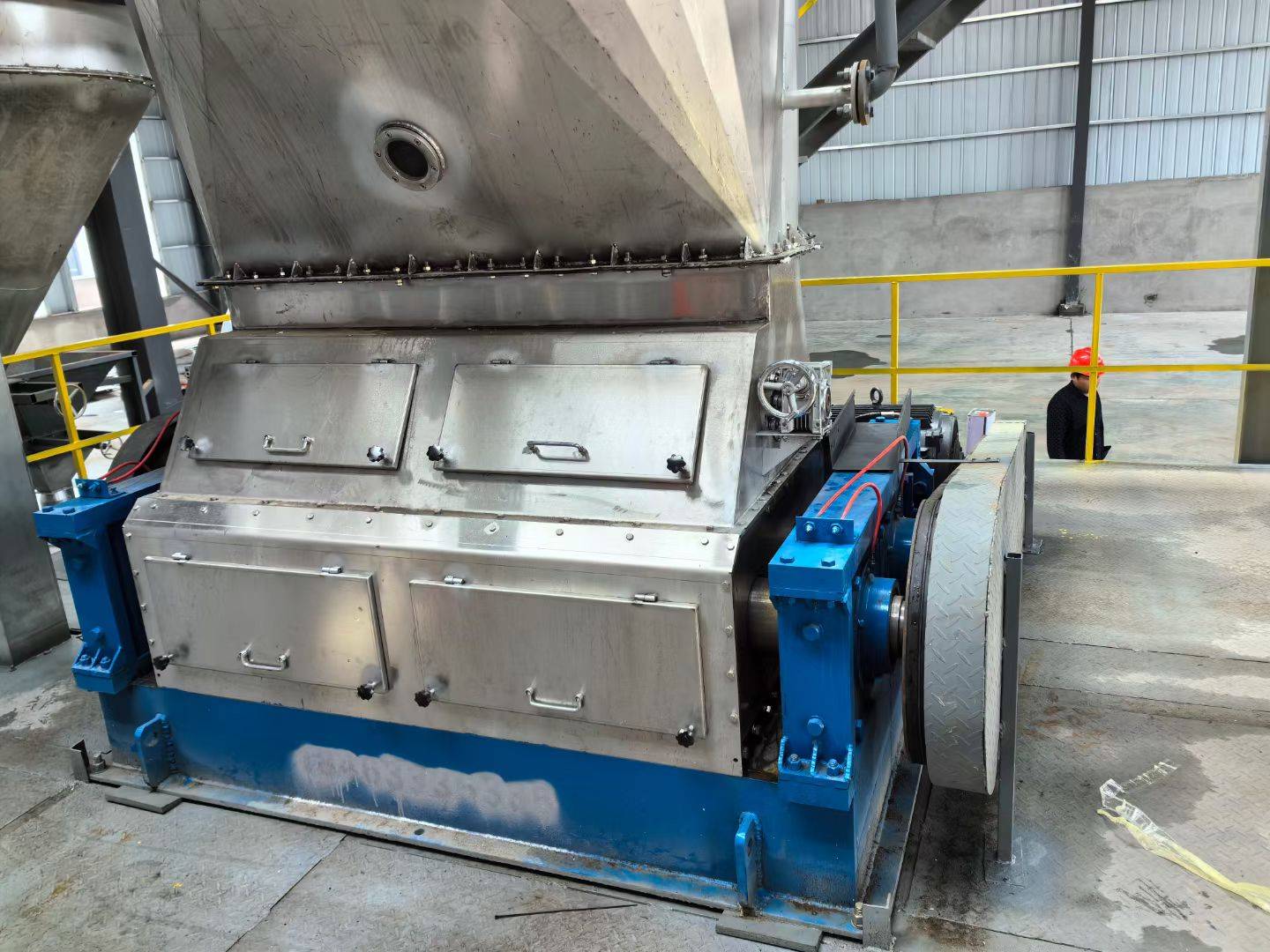
IV. Adding Bacterial Solution: The Flow Meter is Not Just for Show
After the solid raw materials are mixed, the bacterial solution is added. The amount added is metered by a flow meter and pumped into the mixer.
The key points here are two details:
1. Why "add after mixing" instead of "mix after adding"?
If the bacterial solution and solid raw materials are added simultaneously and then mixed, the bacterial solution will be largely absorbed by the dry powder in the initial mixing stage, forming localized high-concentration areas, while other areas will be "deficient in bacteria." Dry mixing for 3-4 minutes before spraying the bacterial solution allows the solid raw materials to be evenly distributed beforehand, making it easier to achieve "micron-level coverage" when spraying the bacterial solution.
2. The accuracy and reliability of the flow meter.
The amount of liquid fermentation bacterial solution added is usually 30%-50% of the raw material weight (depending on the target moisture content). For a production line with a daily output of 10 tons, approximately 1.25-2.1 tons of bacterial solution need to be pumped per hour. If the flow meter deviation exceeds ±2%, it will directly affect the moisture content and fermentation activity of the final product. The design plan clearly requires that "one pump be provided for each important material" and "all pneumatic valves be equipped with quick-connect couplings"-these are common engineering principles to ensure that the production line does not stop, but they are often overlooked in actual procurement.
V. Microbial Activation and Temporary Storage: Engineering Considerations for Two Tanks
Configure two fermentation tanks: one for activating the inoculum and the other for temporarily storing the activated bacterial solution.
What is the engineering logic behind this configuration?
- Activation Tank: The freeze-dried inoculum powder or liquid inoculum needs to be activated for 2-12 hours at a suitable temperature (usually 30-37℃) with a carbon source (molasses or glucose) to allow the microbial community to enter the logarithmic growth phase from dormancy. After activation, the entire batch cannot be used immediately; otherwise, reactivation will be necessary for the next production batch, resulting in excessive time costs.
- Temporary Storage Tank: The activated bacterial solution is temporarily stored and continuously and stably pumped to the mixer during production. Alternating use of the two tanks-one for activation and one for temporary storage and feeding-ensures uninterrupted production.
Production Line Implementation Recommendations: Choosing 304 stainless steel for the tank body is the correct choice, but attention must be paid to the double-layer insulation design. If the ambient temperature in the workshop is below 15℃, the lack of insulation in the tank will lead to unstable activation temperatures and decreased bacterial activity. Although not explicitly mentioned in the design plan, it is recommended to add a hot water circulation jacket or electric heating in actual engineering to ensure that the temperature of the bacterial solution remains constant within the process requirements.
VI. Constant Temperature Fermentation room: From "Relying on the Weather" to "Controlled Fermentation"
The final step in the design process: After the materials are bagged, they enter a constant-temperature fermentation chamber for deep fermentation.
Why is "constant temperature" essential?
Solid-state fermentation is an exothermic reaction-a large amount of heat is generated during microbial metabolism. If the ambient temperature fluctuates greatly (especially in northern winters), the materials may "burn" or "freeze," leading to fermentation failure.
Key technical points of the constant-temperature fermentation room:
- Temperature control range: 25-35℃ is the optimal range for most compound microbial agents.
- Humidity control: The ambient humidity should not be too high (recommended ≤70%), otherwise, increased condensation inside the bags will easily lead to contamination by other microorganisms.
- Ventilation: CO₂ generated during fermentation needs to be removed promptly, otherwise it will affect the activity of aerobic bacteria.
Production line implementation recommendations: There is no need to pursue "high-tech" constant-temperature chambers-a combination of ordinary insulated panel rooms + temperature-controlled fans + circulating air ducts can already meet production needs. The key is that the temperature control system must have a redundancy design, that is, both the heating and cooling devices must have a margin of more than 20%. Otherwise, the temperature control may fail in extreme weather, and the loss of the entire batch of materials will far exceed the difference in equipment investment.
Ⅶ.Easily overlooked "invisible killers": moisture, bacteria, and mycotoxins
Moisture Control: The design requires the moisture content of the fermented wet material to be ≤42% (35%-38% recommended). This indicator directly determines three outcomes:
1. Fermentation Activity: Too low a moisture content (<30%) prevents microbial growth; too high a content (>50%) leads to material sticking and insufficient oxygen.
2. Shelf Life: Fermented materials with a moisture content exceeding 42% will continue to multiply with yeast and mold at room temperature, resulting in bloating and spoilage.
3. Transportation Costs: For the same packaging bag, higher moisture content means less dry matter, increasing the actual cost for farmers.
Microbial Control: "Tap water needs sterilization and dechlorination, compressed air needs precision filtration and oil removal/sterilization"-these are both high-risk aspects that are easily overlooked. Residual chlorine in tap water inhibits microbial activity; oil in compressed air contaminates the bacterial solution, leading to fermentation failure. It is recommended to add ultraviolet or ozone sterilization devices to pre-treat the water used for preparing the bacterial solution.
Mycotoxins: Corn is a high-risk carrier of mycotoxins. In actual production line operation, it is recommended to test each batch of incoming materials for aflatoxin B1, zearalenone, and vomitoxin-this is not only responsible to farmers, but also for the company's own risk control.
Ⅷ. What three practical problems can this line help you solve?
1. Unstable Fermentation Quality
Root Cause: Manual operation, inconsistent bacterial solution addition per batch, and uncontrollable temperature.
Solution: Precise metering of bacterial solution + temperature control in a constant-temperature fermentation chamber → Consistent fermentation results for each batch.
2. Production Capacity Cannot Keep Up with Demand
Root Cause: Limited number of fermentation tanks, long fermentation cycle, production capacity is locked in by the number of tanks.
Solution: Separate mixing and fermentation → Continuous production with a mixer, fermentation chamber can accommodate large batches → Production capacity is only limited by mixing speed and fermentation chamber area.
3. High Equipment Idle Rate
Root Cause: Dedicated equipment can only produce one product, leaving equipment idle when the market changes.
Solution: Flexible solid raw material formulation (corn, rice, soybean hulls, soybeans, wheat can be freely combined), replaceable bacterial strains → One production line can produce multiple fermentation materials.
Ⅸ.FAQ
FAQ
01.Off-odor (ammonia, butyric acid) during fermentation
Causes:
- Imbalanced carbon-to-nitrogen ratio, excessive nitrogen
- Inadequate sealing, allowing air in and causing contamination by other microorganisms
- Excessively high temperature, leading to Clostridium growth
Solutions:
- Adjust the formula, increasing the proportion of carbon sources such as corn
- Check packaging sealing to ensure an anaerobic environment
- Control fermentation chamber temperature to no more than 40℃
02.Slow fermentation start-up, pH not dropping below 5.0 within 24 hours
Causes:
- Insufficient bacterial activity
- Residual antibiotics or disinfectants in raw materials
- Excessively low temperature
Solutions:
- Check bacterial activity and dosage
- Ensure no drug residues in raw materials
- Increase fermentation chamber temperature to 35-38℃
03.Finished product moisture content is too high or too low
Causes:
- Fluctuations in raw material moisture content
- Inaccurate control of bacterial dosage
- Evaporation or condensation of moisture during fermentation
Solutions:
- Test moisture content of each batch of raw materials and adjust the formula
- Calibrate the flow meter to ensure accurate bacterial dosage
- Controlling humidity in the fermentation chamber
04.Uneven mixing, some materials not inoculated into the bacterial solution
Causes:
- Insufficient mixing time
- Clogged or improperly positioned bacterial solution nozzle
- Material clumping
Solutions:
- Ensure mixing time is at least 3 minutes
- Regularly check and clean the nozzles
- Sieve the raw materials to remove clumping
X. Summary
You're not just considering "whether or not to buy a fermentation machine."
You're making a strategic decision about raw material substitution, cost control, and product differentiation.
A well-designed feed fermentation system production line can transform what others see as agricultural waste into "protein energy packs" in your formula; it can transform uncontrollable natural fermentation into standardized production with consistent batches; it can transform a single feed mill into a flexible manufacturing bioconversion platform.
If you're still hesitating, why not send us 5 kilograms of raw materials first-we'll help you make samples, calculate costs, and draw up process diagrams. It's not too late to make a decision after reviewing these three things.
Anyang Gaokang Technology Co., Ltd., operating under the brand GAOK, stands as a prominent and comprehensive enterprise headquartered in the historic city of Anyang, Henan, China. The company has established itself as a leading force in the design, development, manufacturing, engineering installation, and after-sales service of advanced chemical and laboratory equipment Rooted in a region renowned for its profound cultural heritage and bolstered by a strong scientific research ecosystem with hundreds of universities and research institutes, GAOK leverages this unique environment to drive continuous innovation Our core mission is to be a premier global provider of integrated solutions, empowering researchers and industries in chemistry, biology, environmental analysis, food science, and academic research to achieve greater accuracy and efficiency.
�� Official website:https://www.gaokbio.com/